In early August I participated in the 13th Biennial Conference of the European Society for Central Asian Studies (ESCAS). ESCAS is an organization formed back in 1985, when the Cold War was at its peak, and initially it was mainly a forum for Western scholars of Central Asian affairs and Central Asian researchers in exile. Conferences have so far taken place in Europe only, but this year was different: for the first time the event was organized inside Central Asia itself, in Astana, the capital of Kazakhstan.
A new English-language university, named after Kazakhstan’s enlightened despot Nursultan Nazarbayev, has recently been founded in the city’s outskirts, and it hosted the conference. By offering well-paid academic positions and actively recruiting globally, this institution, intriguingly, has managed to attract numerous Western experts on Central Asian affairs, who by now have become residents and in some cases even citizens of Kazakhstan.
Astana has attracted international attention as an architectural mecca of futurism, see, for example, a recent article in The Economist. The new capital started to be built in the late 1990s next to the formerly Soviet city of Tselinograd, the centre of Khrushchev’s failed “Virgin Lands” agricultural campaign.
But, to what extent is Astana actually a Central Asian city? Defining large regions such as Central Asia is notoriously difficult, and my own contribution to the conference related precisely to the academic (and political) debate about Central Asia’s external and internal borders. I suggested to look at infrastructural systems – such as railway networks, electricity grids and natural gas pipelines – to discern such borders. One of my conclusions was that the northern half of Kazakhstan, including Astana, does not really belong to Central Asia. Its infrastructural links with the other ex-Soviet “-stans” further south are generally very weak, whereas its connections with Siberia, the Urals and the Altai region are very strong. Essentially, northern Kazakhstan is thus part of the lands to its north. President Nazarbayev knows this, and it is perhaps the reason why he talks not so much about “Central Asia”, but more about “Eurasia” in the context of Kazakhstan’s geographical position. In my conference paper I develop these thoughts further.
I’m back in Beijing after a few days in Shanghai, having participated there in the “First China-Nordic Arctic Cooperation Symposium”. China is becoming very active in all issues Arctic. The country’s interest in the Polar regions started in the 1980s, but for a long time the focus was on Antarctica only, and three Chinese research stations have since then been established there. Since 2004, however, there is also a Chinese research station – the “Yellow River” station – in Norway’s Spitsbergen archipelago. The researchers at the proud Polar Research Institute of China (PRIC), based in Shanghai, have skillfully exploited Beijing’s growing geopolitical and economic interests in the Arctic, using non-scientific arguments to attract more research funds and other forms of state support. The Chinese interest concerns in particular the “Northern Sea Route” (as the Russians traditionally call it) and its possibly growing importance in an age of increasingly ice-free Arctic summers. Cooperation with the Nordic countries seems natural from this point of view since they are the ones that might profit the most from shorter voyages between China and Europe. The perceived political relevance of the symposium was confirmed by the participation of several China-based diplomats, not only from the Nordic region, but from Russia and North America as well. The Russian ambassador to the Arctic Council, Anton Vasiliev, who also happens to speak fluent Chinese, also participated.
The symposium was essentially a Chinese-Icelandic initiative, and participants from these two countries totally dominated the event. Iceland had skillfully mobilized the support of the other Nordic countries for the symposium, thus formally legitimizing the “Nordic” profile of the conference, but in fact only one or a few participants from each of the other Nordic nations participated. Apart from Viktoria Li of the Swedish Consulate in Shanghai, I was the only Swedish representative.
No less than five Chinese presentations dealt with the Northern Sea Route. The best one was by Bai Jiayu of Shanghai’s Ocean University of China, who provided a meticulous mapping of the legal and regulatory aspects of future transportation. An interesting trend is that Russia recently has become very active in seeking to attract cargo to the northern route, having adapted its legislation to facilitate for foreign vessels en route in Russian Arctic waters. Zhang Xia of PRIC’s newly established division for strategic analysis made a good attempt at predicting future transport demand along the same route, although to me the results appeared somewhat unreliable. What one can definitely say is that it’s extremely difficult to predict how the route will actually be used.
Other noteworthy presentations were delivered by Kim Holmén (Norwegian Polar Institute) on the basics of Arctic Climate Change, Lassi Heininen (University of Lapland) on recent trends in Arctic geopolitics, Natalia Loukacheva (University of Akureyri) on Arctic governance and Polar law, Aki Tonami (Nordic Institute of Asian Studies at Copenhagen University) on similarities and differences between China’s and Japan’s Arctic policies, and Sápmi-dressed Anders Oskal (International Centre for Reindeer Husbandry) on the adaptation of Arctic indigenous peoples to globalization and climate change. The very well-choreographed highlight of the symposium, however, was PRIC Director Yang Huigen’s proposal for the establishment of a China-Nordic Arctic Research Center (CNARC). The proposal had in reality already been accepted by the Chinese government and several Nordic institutions – with Sweden being the only country not yet represented. A major article was published the next day in China Daily in which both CNARC and the symposium itself featured prominently.
My own appearance at the symposium, on behalf of myself and Dag Avango, who is much more of an Arctic expert than I am, was about Arctic energy exploration in historical perspective. Our main point, which appears to contradict public perception, was that the recent surge in such exploration is in no way the result of climate change in the Arctic. The Arctic has already seen two major energy booms – one in the early twentieth century in which coal was at focus, and a second one during the Cold War period in which oil and gas was at stake – and in neither of these cases did the harsh Arctic climate or the presence of massive sea ice constitute any fundamental obstacle. Today we see a third Arctic energy rush, and actors cleverly make use of global warming as a new way to attract support for visions they have already had for many decades.
I’m back from a few days in what the Chinese call a “natural village” just outside Beijing, where I participated in an international workshop on the theme “Disasters wet and dry: Rivers, floods, and droughts in world history“, organized by Renmin University of China in Beijing and the omnipresent Rachel Carson Center in Munich. The organizers – mainly Donald Worster, Christof Mauch, Xia Mingfang, and in particular Hou Shen (though she is younger, and in China this means she must not be first on the list!) – had done a great job in bringing in excellent scholars from all continents to present their stories, often impressive in their empirical depth, of water-related disasters in different corners of the globe.
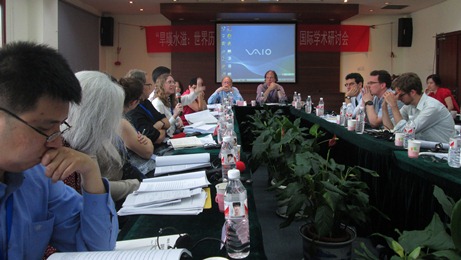
The topic was perfectly chosen to enable intellectual interaction between Western and Chinese researchers. I was impressed by what the Chinese are actually doing in this field, in terms of archive- and interview-based studies both of concrete disaster experiences and of more long durée-style accounts of, for example, the Yellow River from an environmental history point of view. But there are also a number of Western – mainly British and North American – historians who master Chinese as a language and have used it to provide their own accounts of the same topics. My own favourite among these were Kathryn Edgerton-Tapley’s dramatic story of how in 1938, i.e. during the war between China and Japan, a major dike on the Yellow River was deliberately destroyed and the whole river changed its course, the result being hundreds of thousands of people falling vicitim to both floods and droughts.
Striking was also the presence of Western historians who actually study waters far away from their home, such as Nicholas Breyfogle’s research on Lake Baikal and the Angara River in Russia, Bradley Skopyk’s study of water in colonial Mexico, Steven Serels’s post-doc project on Sudan, and Dale Stahl’s research on disaster management in Baghdad in the Interwar period.
But there is still a linguistic and cultural divide between Western and Chinese historians. Some of the most interesting Chinese conference papers were available in English only in the form of a translated abstract, and during the conference simultaneous translation was partly organized, though mainly from Chinese into English only. English native speakers, this is my impression, often are not at all aware of the difficulty with which foreigners – not only Chinese! – listen to what is being said. Donald Worster eagearly encouraged the Chinese conference participants to become more active in the discussion, but apart from a few US-based Chinese scholars, they still tended to remain silent. The will is already there, but more interaction between our respective communities will certainly be needed to bridge the divide.
Last week I gave a seminar at Renmin University of China in Beijing, where a Center for Ecological History exists since a year. It has aroused some attention abroad, as one of the world’s most well-known environmental historians and founder of this research field, Donald Worster, serves as the centre’s honorary director. It also has strong connections with the excellent Rachel Carson Center in Munich.
I was much too late in submitting an abstract to a major conference organized by the Centre, “Disasters wet and dry: Rivers, floods, and droughts in world history”, but I was given the generous opportunity to compensate for this neglect of mine by presenting some of my water-related research in the Centre’s internal seminar series. I felt inspired by the theme of the upcoming conference, and decided to link, in a somewhat unusual way, the seminar with my earlier research on nuclear power history. The result was a seminar paper entitled “Nuclear disasters wet and dry”, in which I made an attempt to reinterpret the history of nuclear power as a history of water, and nuclear engineering as a special case of hydraulic engineering.
The implication is that nuclear power perhaps, after all, is not as new as it might seem: rather it can be understood as but the latest extension of a long history that started in earnest with the great ancient hydraulic empires of China, India, Mesopotamia, Egypt, and so on. I also argue that nuclear power, contrary to what has been the point in earlier research, is more dependent on and entangled with nature and the landscape in which its facilities are built, than most other energy sources. The nature of nuclear disasters, for their part, can be better understood if they are seen in relation to the ways in which nuclear engineers have learnt – and not learnt – from the mistakes of other hydraulic engineers in the past.
A few months ago I received a grant from the Swedish Research Council (VR) for a project called “Sweden and the Origins of Global Resource Colonialism: Exploring a Small Country’s Natural Resource Interests in Africa, Caucasia and the Arctic“. My colleagues Dag Avango, David Nilsson and Hanna Vikström at KTH also participate in the project and we have now started up the project in earnest. We have two main goals: the first is to show that the exploitation of colonial natural resources, as it developed from around 1870 up to today, was not something in which only the colonial powers themselves were involved, but a process of which smaller nations were also deeply part. To do this we map the phenomenon of global resource colonialism as a large technical system with a variety of interelated varieties and interests. The second goal is to revise earlier research on Sweden’s development as a nation during the same period, by scrutinizing the ways in which Sweden’s involvement in global resource colonialism shaped everything from its foreign policy and military strategies to its industrial and economic development. To do this we combine our technical systems perspective with a political economy approach.
At a recent internal seminar we critically reread the existing literature on Swedish foreign policy in historical perspective and found that most authors in the field tend to discuss foreign policy almost totally in isolation from industrial development and technological trends. That’s far from satisfactory for anyone with an ambition to view Swedish history as something taking place not only in Sweden itself, but globally as well. In the next phase of the project we’ll proceed by carrying out a number of specific case studies. David Nilsson is already about to complete an article on Sweden’s role at the Berlin conference (1884-85), at which Africa was divided up. Dag Avango looks at the Arctic as a region of colonial-style resource exploitation, with deep Swedish involvement. My own case study deals with the Swedish Nobel brothers in Baku, where they early on became the dominant actors in the making of the Russian oil industry before the revolution. What really were their connections with the Swedish government? Hanna Vikström meanwhile is starting up an exciting PhD project on Sweden in the context of rare metals extraction and processing in colonial regions.
The past two weeks I have spent as a guest researcher at Hong Kong Baptist University’s excellent Department of Geography. Daphne Mah, a talented assistant professor with research interests that largely overlap with – or rather nicely complement – mine, had generously invited me. I gave a seminar at the department on one of the topics I’m currently working on, “The purpose of smart grids” (part of my FORMAS-funded project), and a guest lecture relating directly to an article that I’m writing, “Energy as a foreign policy tool” (this is a spin-off from my book Red Gas) in the course Energy Policy and Analysis. As it turned out, Daphne was not the only one with a great interest in energy at the department, which turned out to host a substantial share of Hong Kong’s overall energy-related research. Yu Xiaojiang, for example, an associate professor, has published extensively on energy developments in a variety of Asian countries, whereas Larry Chow, a visiting professor, is Hong Kong’s grand old man in the field of energy studies, with a particular interest in the international oil trade and oil price formation over longer periods of time.
I also paid a visit to the tiny but growing University of Macau, an hour’s boat trip away from central Hong Kong, where I met Oscar Sanchez-Sibony, an American-educated assistant professor originally at home in Spain, and several of his colleagues at the Department of History. Oscar has written a highly interesting dissertation, “Red Globalization: The Political Economy of Soviet Foreign Relations” and we had a lot to talk about regarding the relations between Soviet energy and foreign relations in the Cold War era. Another historian based in Macau is Michael Share, whose book “Where Empires Collided“ (2007) deals with Russo-Soviet relations with Hong Kong, Macau and Taiwain, and who is currently using Russian and British sources to shed new light on the relations between the Russian, British and Chinese empires in Xinjiang.
In Hong Kong one of the most dynamic environments in terms of research is clearly the young Institute for the Humanities and Social Sciences at the University of Hong Kong. It is led by Professor Angela Leung, who turned out to be very keen on making interdisciplinary STS and historical studies an essential component of the institute’s fields of excellence. A number of top historians of technology, notably Francesca Bray and Lynn White, belong to the institute’s honorary professors. A major emphasis is on the history of medicine, and there are close links between the institute and HKU’s Centre for Humanities and Medicine, which is led by Robert Peckham. Although my own research so far has rarely touched on medicine, I was struck in my discussion with Angela and Robert by the multifaceted ways in which imperial and global histories can be viewed and interpreted through the lens of medicine and hygiene, and I felt inspired to rethink the ways in which world-wide circulation of energy and natural resources could be linked to these topics.
This week I have spent in Taiwan giving two seminars and familiarizing myself with the Taiwanese STS and environmental studies communities. In Taiwan the only formally organized STS centre is at the medically oriented Yang-Ming University, beautifully situated on the forested hills of northern Taipei, where Professor Daiwie Fu (who among many other things is also the initiator and until recently chief editor of the East Asian Journal of Science, Technology and Society) and the centre’s director Wenji Wang had invited me to present my research on the “nuclear renaissance” in historical perspective. Nuclear power is currently subject to heated debate in Taiwan, with hundreds of thousands of people recently demanding that Taiwan’s fourth nuclear power plant, which has more or less been completed, not be taken into operation. Today I read in the news that the government regards such a radical potential move “unconstitutional”. In any case, this political debate made it even more appealing to discuss the past and future of nuclear from an STS and history point of view, and I feel strengthened in my conviction that social and historical studies of nuclear power would profit from integrating research on Europe and Asia.
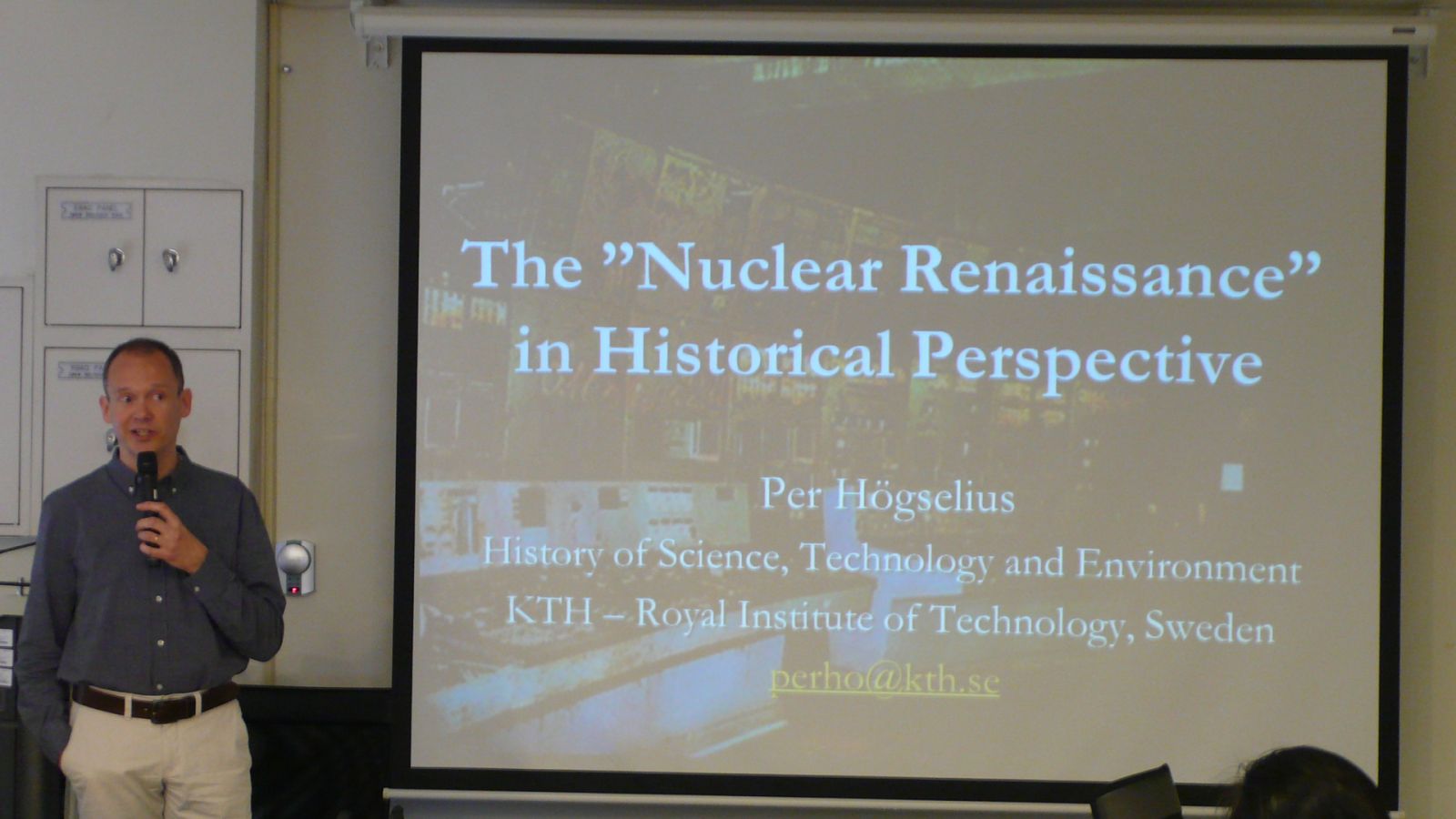
I was impressed by the Yang-Ming STS group, which turned out to be very dynamic and truly interdisciplinary in a way that made me feel very much at home! Other STS-oriented researchers are active at National Taiwan University and the prestiguous, research-only Academia Sinica. Academia Sinica, as it turned out, also hosts the French Centre for Research on Contemporary China, whose director Paul Jobin also has substantial experience from and interest in nuclear-related issues. At National Taiwan University I did not manage to organize any meeting with the STS researchers, but I met up with Professor Hwong Wen Ma at NTU’s Graduate Institute of Environmental Engineering and gave a guest lecture on “Opportunities and Risks in International Energy Relations” for a group of 50 graduate students. Together with Ming Chih Chuang, who is now with the government, Hwong Wen recently published an excellent article on Taiwan’s energy security, which will be highly interesting also from the perspective of small European countries.
My new book, Red Gas: Russia and the Origins of European Energy Dependence (Basingstoke and New York: Palgrave Macmillan, 2013), has now been published. It is part of Palgrave Macmillan’s Transnational History Series, and I hope it will be of interest to historians of the Cold War period. But I also hope that the book will be read not only by historians, but by academics and others interested in the present-day international energy debate, in Europe and elsewhere. I also have some ideas on building on research results from this project and, in combination with other research by myself and others, proceed to draw out more general implications in a theoretical and conceptual sense, and for policymakers.
I will be curious to see the reactions and reviews. As always with book projects, most of the research was carried out quite some time ago. But it has really consumed much of my time during the past few years, and the research underlying the book has taken me on long archival trips to Moscow, Kiev, Vienna, Berlin, Koblenz, Munich and Geneva. It has been great fun, but I also wonder if I will ever again have time to devote so much effort to a book.
 Per Högselius